
Taxes, homelessness, and healthcare: three issues that shaped the Gatineau City Council meeting
Drazen Seslija
The potential increase in motorists’ bills, the proposed transitional housing project for people experiencing homelessness, and the proposal by designated councillor Timmy Jutras were among the topics that sparked lively discussion during the Gatineau City Council meeting held on Tuesday, September 22, at 7 p.m. at the Centre de services de Buckingham.
A rising tax
The council approved the indexation of the passenger vehicle registration tax for the next three years. The municipal tax, set at $60 in 2025 and then raised to $90 in 2026, is in addition to the $30 provincial contribution earmarked for public transit. The total amount paid at the time of registration is currently $120.
For 2027, a 3% indexation is planned, which will bring the amount billed to $123.60, according to the measure adopted by the council.
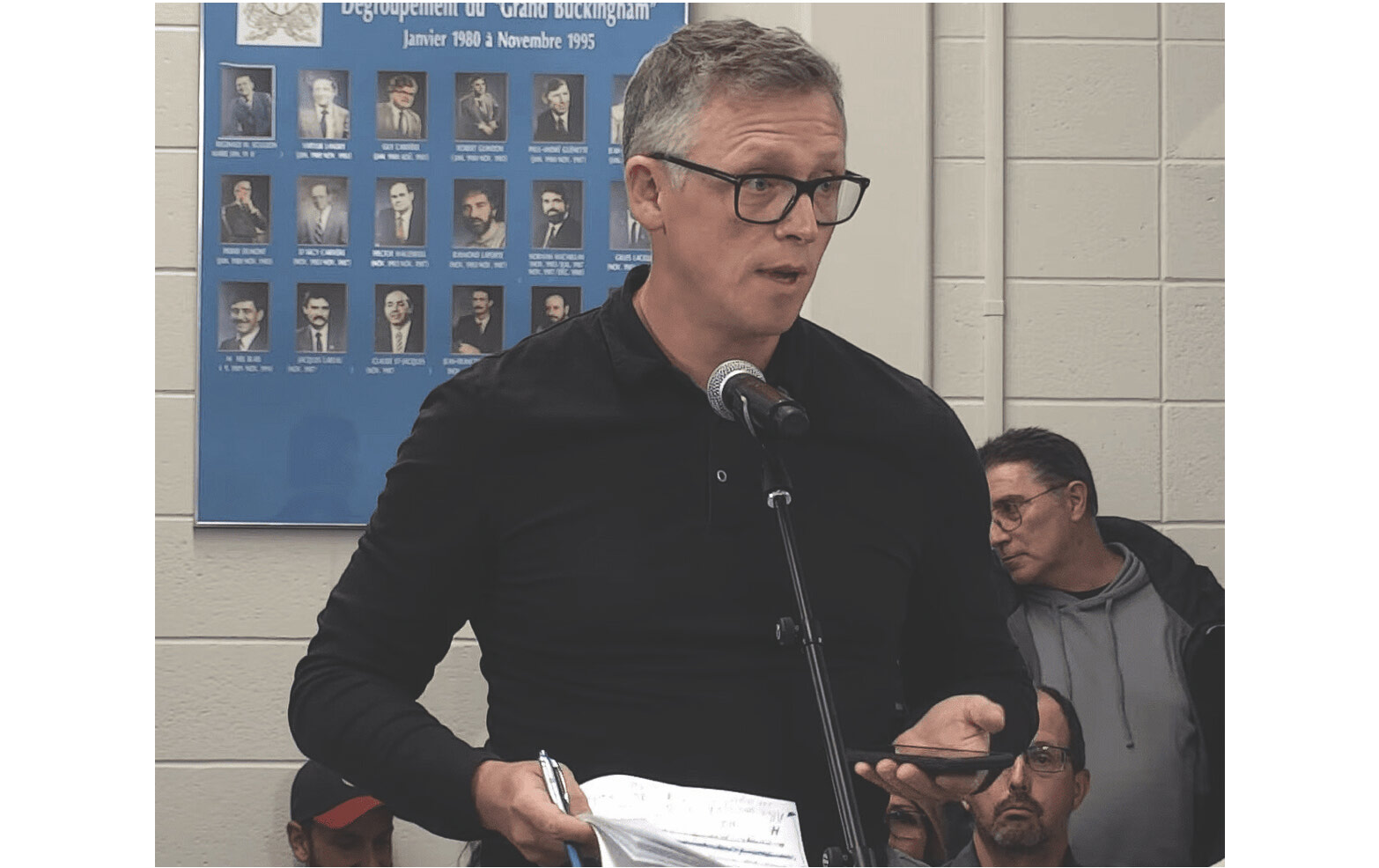
However, the issue sparked a debate over the funding of the Société de transport de l’Outaouais (STO). Designated councillor Timmy Jutras questioned the decision to automatically index the contribution rather than reviewing the transit agency’s financial needs each year.
Jutras pointed out, in particular, that the consumer price index had risen by 23% over ten years, while the STO’s expenditures had increased by 65%. His colleague Luc Chénier described the STO as a “bottomless pit.”
Caroline Murray, a city councillor and member of the STO’s board of directors, defended the indexation, noting that the city council retains the ability to adjust the contribution.
A divisive housing project
The council also decided to move forward with Transitiôn Québec’s transitional housing project at 38 rue Saint-François, in the Manoir-des-Trembles–Val-Tétreau neighbourhood.
The project aims to provide ten rooms for temporary housing for people experiencing homelessness, with municipal funding through the Programme d’habitation abordable Québec (PHAQ).
Residents of the neighbourhood had requested that the matter be postponed, citing, among other things, a lack of consultation and the short timeframe between the project’s announcement and the council meeting. A petition from residents requesting a postponement of the vote had also been submitted.
The council nevertheless chose to move forward. The district's councillor, Adrian Corbo, acknowledged that the process could be improved and indicated his intention to continue discussions with residents and the organization.
“I want to talk with Transitiôn Québec, I want to talk with you, and I want to discuss the arrangements for integrating people into your neighbourhood throughout the process until we reach a sustainable situation,” Corbo said.
Timmy Jutras’s proposal rejected
Another issue that sparked discussion was the proposal by designated councillor Timmy Jutras asking that the next Quebec government appoint a single person to serve as both Minister of Health and Social Services and Minister responsible for the Outaouais region.
Jutras argued that combining these roles would give the region a single point of contact with direct authority over issues related to the healthcare system crisis.
The designated councillor believes this approach would send a clear signal to the Quebec government and allow regional elected officials to speak with one voice.
“We need allies in the Quebec government, and this would send a strong message: ‘We speak with one voice. We need a strong minister responsible for the Outaouais region who is also the Minister of Health and Social Services,’” he argued before the vote took place.
Mayor Maude Marquis-Bissonnette instead argued that Gatineau should focus on the desired outcomes to help the Outaouais region catch up, rather than dictating to the next government how to achieve them. Edmond Leclerc, the host councillor for the meeting, also expressed reluctance at the idea of the city council imposing a structure on the provincial government.
Steve Moran, for his part, opposed the idea that a health minister—who might come from another region—would automatically be responsible for the Outaouais region.
Jutras’s proposal was ultimately rejected by the council.