
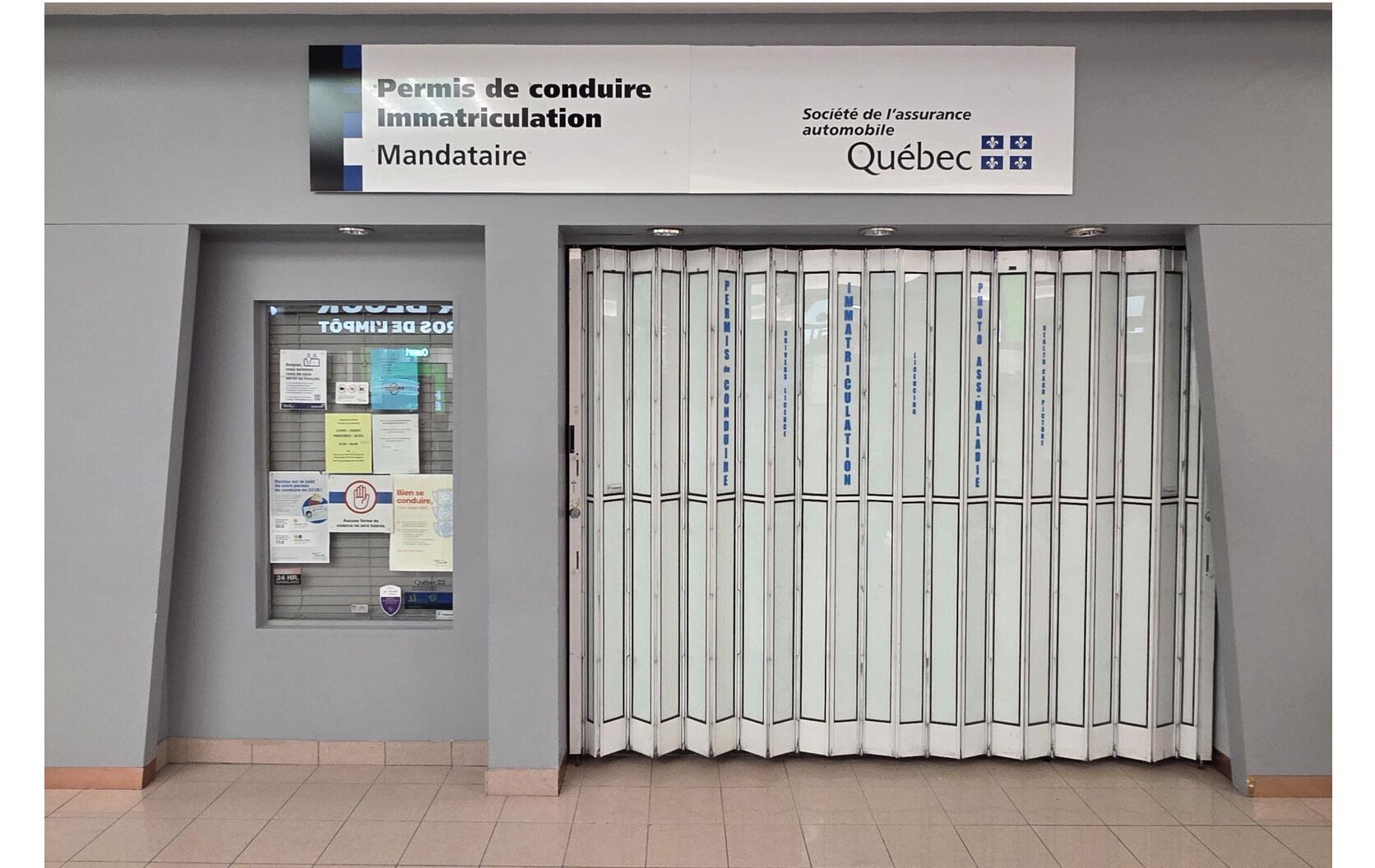
Quebec's auto insurance board has announced sweeping internal reforms in the wake of a public inquiry that found senior officials spent years lying to the government about the runaway costs of a billion-dollar digital platform that failed spectacularly at launch. Photo: Tashi Farmilo
Quebec's auto insurance board announces internal overhaul after SAAQclic scandal
Tashi Farmilo
Quebec's automobile insurance board announced a series of internal changes on April 9 as it tries to move past the scandal surrounding the botched rollout of its SAAQclic online platform, which ran hundreds of millions of dollars over budget and triggered a damning public inquiry earlier this year.
The Société de l'assurance automobile du Québec, known as the SAAQ, said the shake-up is meant to improve how the organization is run, tighten its grip on contracts, and make sure the government receives more accurate and honest information going forward. The centrepiece of the changes is a new internal unit that will bring together oversight, integrity, and compliance functions under one roof, without adding any new employees.
The announcement comes roughly two months after Judge Denis Gallant released his nearly 600-page report from a public inquiry into the SAAQclic disaster. The report found that senior SAAQ officials had for years deliberately hidden the true cost of the project from the provincial government, and that the undertaking had been far too large and rushed, with nowhere near enough internal oversight to keep it on track. When the platform launched in February 2023, it immediately caused chaos. People across the province were unable to renew their driver's licences or access their accounts online, sending frustrated drivers to line up outside SAAQ offices in the middle of winter for weeks. Quebec's auditor general subsequently found the project had exceeded its original budget by at least $500 million, with the total bill expected to surpass $1.1 billion.
The inquiry found that efforts to conceal the true cost dated back to 2015, when the SAAQ first sought government approval for the project and submitted figures that significantly understated what it would require. By the time Judge Gallant's report was published, those identified as having misled the government had already left the organization. The SAAQ's current chief executive, Serge Lamontagne, was brought in after the scandal broke. When the report was released in February, he publicly apologized to Quebecers on behalf of the organization, saying it was a small number of senior employees who had lied to both the public and the government.
The Gallant report made 26 recommendations in total, among them a call for the provincial government to develop far stronger in-house expertise on major digital projects, rather than farming so much of the work out to private contractors. A separate investigation by Quebec's anti-corruption unit, UPAC, is also ongoing, and the government has indicated it is exploring potential legal action against former officials and private firms involved in the project.
Transport Minister Jonatan Julien said he was confident the current leadership could turn things around. "These organizational changes, implemented swiftly, will strengthen SAAQ's governance," he said, adding that he believed the reforms underway would prove lasting and restore public trust.
Board chair Dominique Savoie framed the restructuring as a foundation for longer-term renewal. "The actions taken are the first building blocks that will allow us to construct the SAAQ of tomorrow," she said.
Lamontagne acknowledged that the changes were only the beginning. "These initial actions are aimed at giving us the means to work differently, so that we can perform better and move toward a future where transparency and integrity are the norm," he said. "Other steps will be taken in the short and medium term to reach our objectives and regain the trust of the public."