
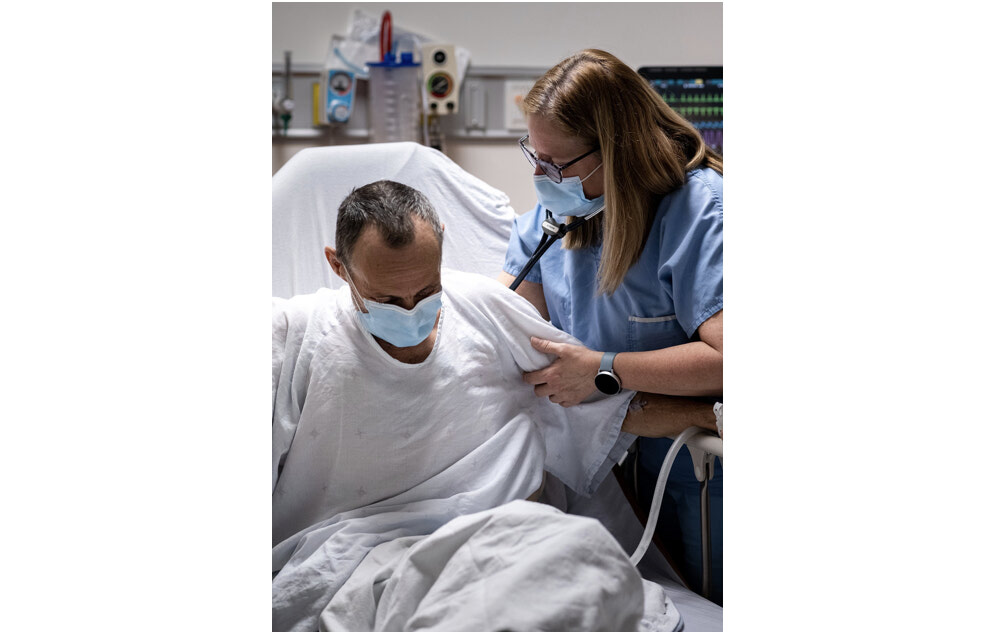
Outaouais health advocates met with Santé Québec to demand a concrete plan and fair funding after years of service shortfalls, arguing that the province is failing to follow its own law meant to ensure equitable health care across regions. Photo: Courtesy
Outaouais patients left waiting
Tashi Farmilo
Santé Québec met with health advocates in Gatineau on February 3, to respond to growing concern that the Outaouais region is being left behind in Quebec’s health care system. The meeting came after years of complaints about underfunding, long wait times, and patients being forced to travel outside the region to get basic care. Local group Action Santé Outaouais (ASO), which was at the meeting, said it appreciated the chance to speak directly with the new health agency, but warned that Outaouais still lacks a clear plan to fix the gaps that continue to put patients at risk.
To understand what is at stake, it helps to know how the system changed. In 2023, the Quebec government passed a new law to reorganize health care across the province. Referred to as, LGSSSS, this law created Santé Québec as a central agency in charge of hospitals and health services. While the Ministry of Health still sets policies, Santé Québec is now responsible for managing operations. One section of the law, Article 115, says that health funding must be distributed fairly between regions. That includes looking at how healthy people are, how far they live from services, and what their local needs are, not just how many people live there. ASO says the government is not following this rule when it comes to Outaouais.
In 2025, the province announced a 90 million dollar cut to the region’s health care budget. After pushback from local groups and mayors, the cut was reduced to 45 million dollars. But ASO says even that is a serious blow to a system already stretched too thin. Their research shows that Outaouais was short nearly 350 million dollars in health funding in 2023 compared to what similar regions would receive. On top of that, Quebec spent nearly 118 million dollars last year to send local patients to Ontario for care because services in Outaouais were not available. That cost has jumped by 25 percent since 2020.
ASO points to the effects of this underfunding on everyday people. Wait times in emergency rooms are longer than elsewhere in Quebec. Patients in Outaouais face a higher risk of dying from surgical complications. Life expectancy is lower in most of the region’s counties. In some cases, women have had to leave the region just to give birth. More and more people are also paying out of pocket for surgeries or home care, something that goes against the promise of public health care.
At the meeting, ASO called on the government to commit to a real recovery plan. They are asking for a three-year reinvestment, starting with 150 million dollars this year and rising to more than 400 million dollars by 2028. They also want local voices to be part of the planning. Their proposals include hiring more staff, improving coordination between hospitals and clinics, and creating services tailored to the realities of a region where many residents live far from major centres.
ASO also raised concerns about how funding is currently awarded. Right now, money is tied to how well a region performs and how many services it delivers. But Outaouais, they argue, does not have enough resources to compete with larger or better-equipped regions. That means it gets less money because it already has less to work with, a cycle that makes it even harder to catch up. ASO believes this approach directly contradicts the fairness promised in the LGSSSS law.
Santé Québec leaders said they are open to more conversations. But ASO says the region has had enough of empty talk. They want concrete action that finally puts Outaouais on equal footing with the rest of the province.