
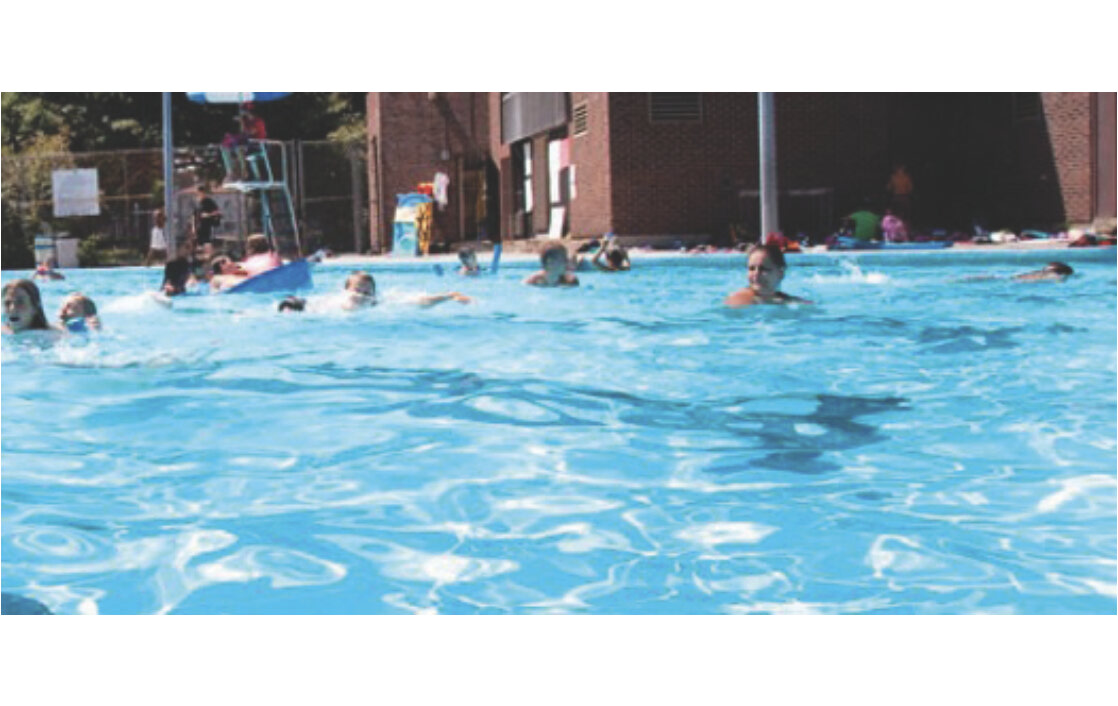
Gatineau is drawing up a 10-year plan for its aging outdoor pools, most built in the early 1970s and concentrated in Hull, as councillors push to keep and modernize them in the face of hotter summers. Photo: Courtesy of the City of Gatineau
Gatineau weighs the future of its aging outdoor pools as rink overhaul moves forward
Tashi Farmilo
Gatineau’s outdoor pools, most of them built half a century ago and now past their expected lifespan, will be the subject of a 10-year rethink after municipal recreation staff asked the city’s leisure, sports and community development commission on October 7 to help guide a 2027-2037 plan on whether each pool should be fixed, rebuilt or replaced by something else, as hotter summers and rising costs press the issue.
Martin Goulet, who heads the aquatics section of the recreation department, told the commission at the Maison du citoyen that the city operates nine outdoor pools, five wading pools and three supervised beaches. Industry practice assumes a pool will serve about four decades, with a major overhaul at mid-life. Gatineau’s facilities average 45 years, and no significant renovations have taken place since an engineering review of their concrete was completed in 2016. That review placed La Vérendrye in the Gatineau sector and two Hull pools, Fontaine and Desjardins, at the bottom of the list. At the other end sits Jack-Eyamie in Masson-Angers, which opened in 2022.
Hull holds seven of the nine outdoor pools, a concentration that reflects its history as a denser city with smaller lots. It also has the lowest rate of private backyard pools in Gatineau, at 39 for every 1,000 residents, less than half the 84 recorded in Masson-Angers. Goulet pointed to a 2020 survey showing nearly three quarters of respondents swam at an outdoor pool every week, and that most avoided indoor facilities because they live too far away.
Use of the pools is uneven. Lifeguard counts, taken each hour on days the pools were open, put Jack-Eyamie at the top with just over 26 swimmers an hour on average. Fontaine, Manoir-des-Trembles and other Hull pools each exceeded 18, while Desjardins drew about 13 and Sauvageau, on rue Mutchmore, just over nine. The Saint-Rédempteur wading pool, since closed, saw about one swimmer an hour, and Goulet said such numbers weighed in that decision.
The warming climate has also become a factor. Goulet cited research projecting a rise of 1.2 degrees Celsius in the capital region by 2040, which would roughly double the number of very hot days and nights. Any rebuild will also have to meet newer provincial requirements that renovated public pools be accessible to people with disabilities or limited mobility, which rules out simply recasting the old rectangular basins.
Elected members made clear they had little appetite for cuts. Isabelle Cousineau, councillor for Parc-de-la-Montagne–Saint-Raymond, argued that reducing places to cool off makes no sense heading into hotter summers, and stressed the value of swimming for older residents. Adrian Corbo, who represents Manoir-des-Trembles–Val-Tétreau, described the Hull pools as a lifeline during heat waves in a sector without an indoor pool, and urged the city to rebuild them simply and affordably.
Commission chair Bettyna Bélizaire, councillor for the Plateau, noted that her growing district has no outdoor pool whatsoever, a shortfall that disappears when Hull is treated as a single sector. She asked that any future pool be designed to offer swimming lessons in summer. Goulet agreed, noting that teaching children to swim and preventing drownings is the heart of the city’s aquatic mandate, something no splash pad can do.
Cousineau also raised a troubling contradiction. Sauvageau, the least-visited pool, serves the poorest part of her district. One member suggested that newcomer families in nearby subsidized housing may be reluctant to let children swim without strong skills, and Goulet said lifeguards report hearing much the same, describing it as a broader barrier to access.
The commission then turned to the city’s plan to reshape its network of 85 outdoor rinks. Sonny Carrier, head of sports operations and facilities, said 46 rinks, including all those run by community groups, are being kept. The remaining 39, maintained under private contracts, will be reviewed over three winters, with 16 assessed this season, eight the next and 15 in 2028-2029.
Rinks will be rated mainly on how heavily they are used, followed by the quality of ice and amenities, their geographic coverage and, to a lesser extent, their role in the neighbourhood. Any rink scoring under 60 per cent could be recommended for closure, with the final say going to the executive committee and council. A local organization may step in to operate a threatened rink at any time.
In Aylmer, the refrigerated rink trial at Parc des Cèdres will return for a second winter, with setup expected within about three weeks. Staff have identified other possible locations, among them Place de la Cité and the Casino du Lac-Leamy parking lot. Cousineau questioned the casino option, arguing it is cut off from residents on foot by a highway, and put forward a large park near Fairview in her district. Assistant director Christian Riopel said the list remains open and that covering a full-size refrigerated rink with a roof would cost close to $2 million.
Luc Chénier, councillor for Le Versant, cautioned that refrigerated rinks reserved for skating could shut out hockey players if neighbouring boarded rinks were closed, and said the city should be measured by how carefully it carries out the review.