
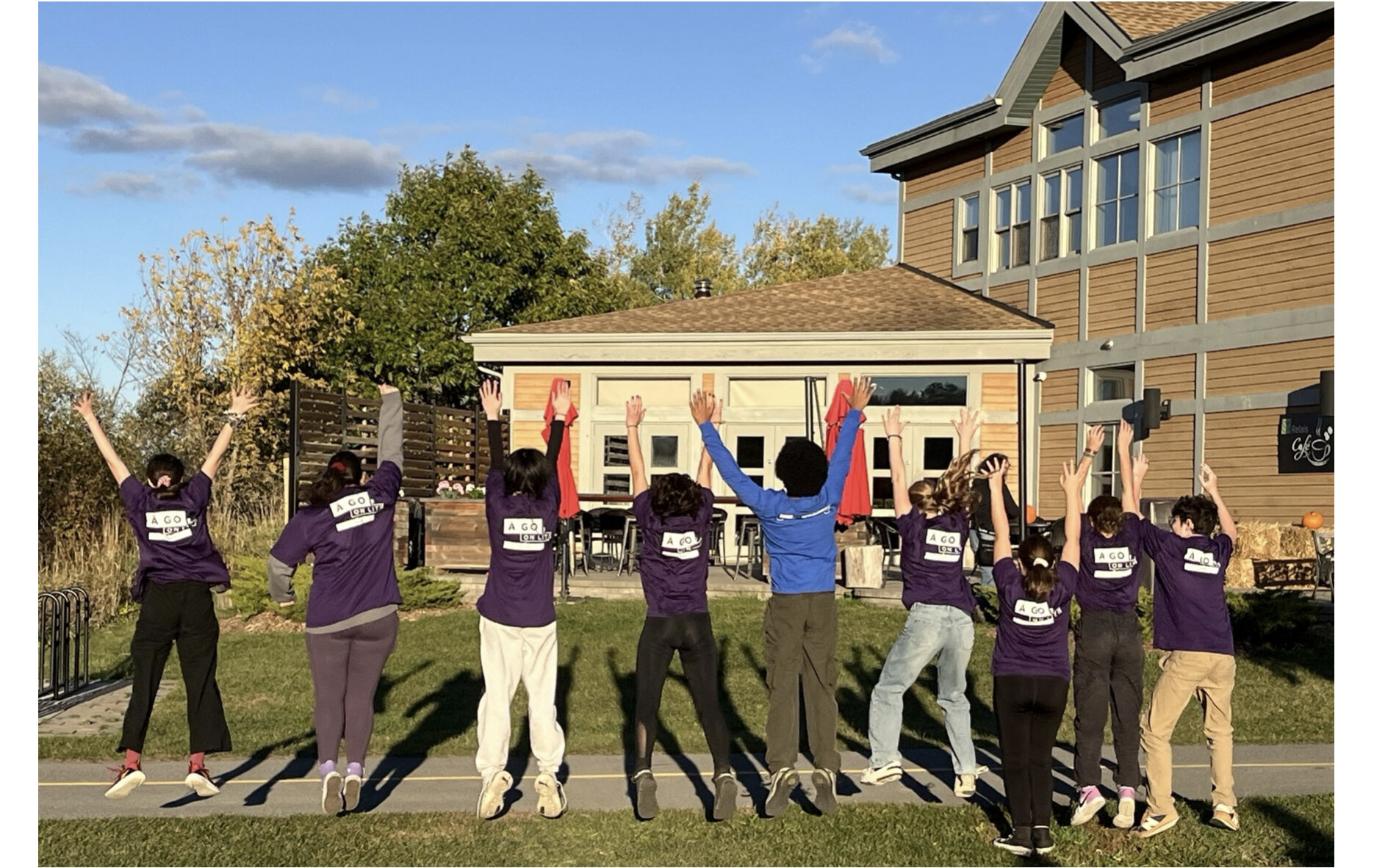
When Quebec's education ministry missed a funding deadline, the Table Éducation Outaouais stepped in with $70,000 of its own money to ensure hundreds of at-risk children in the Outaouais would not lose access to summer learning programs. Photo: Courtesy of the Table Éducation Outaouais Facebook page
Gatineau education group draws on its own reserves to keep summer programs alive for at-risk youth
Tashi Farmilo
Facing a delayed funding announcement from Quebec's Ministry of Education, the Table Éducation Outaouais announced on April 21 that it will spend $70,000 of its own money to sustain summer learning programs for vulnerable children in the Outaouais, rather than leave them without support during the months when they are most likely to fall behind academically.
The TÉO, recognized by the provincial government as the region's official school perseverance council, will pull the money from its unrestricted reserves, a stopgap the organization says it felt compelled to arrange after the ministry missed its deadline to confirm funding for the 2026-2029 cycle.
Without that intervention, hundreds of children who depend on structured summer programming would have had nothing. In 2025, TÉO-backed projects served 1,745 participants across the region, including 891 young people over the summer months alone. Those programs exist because the need is well-documented and the consequences of neglect are lasting. Children from lower-income families are hit hardest, lacking the books, camps, and enriching experiences that more affluent peers take for granted, a disparity that quietly compounds with every passing summer. TÉO targets those most exposed: children with learning difficulties, students whose first language is not French, and those with little access to stimulating activities or resources outside the classroom.
The academic cost of an unstructured summer is steeper than most parents realize. According to the Brookings Institution, students can lose the equivalent of a full month of classroom learning over the break, with mathematics skills taking the worst of it. Come September, teachers do not simply pick up where they left off. Those losses accumulate year after year, quietly eroding confidence, straining motivation, and nudging the most vulnerable students steadily closer to the exit.
The $70,000 TÉO is committing represents only about 40 per cent of what the ministry provided for similar projects last year. The organization knows it cannot cover everything. Instead, it plans to contact the community groups and project leaders it funded last summer, identifying which programs are in the most acute danger of collapse and directing money toward those with the deepest roots in local communities.
TÉO president Steve Brabant framed the decision as both a moral obligation and a calculated risk. The finance committee reviewed the exposure to the organization's long-term health before the board gave its approval. "Even in a context of financial uncertainty, the board of directors of the Table Éducation Outaouais has chosen to act in a responsible and proactive way," Brabant said. "The needs of vulnerable youth do not stop during the summer, and it is our collective duty to support initiatives that concretely contribute to their educational success and their well-being."
He was equally clear about the limits of what a regional organization can do on its own. "This strategy is a transitional solution," he said. "It demonstrates the capacity for regional mobilization, but it cannot substitute for a lasting, structural commitment from the government toward our young people."
TÉO has begun reaching out to regional elected representatives to make that case directly, arguing that communities should not have to raid their own reserves every time a ministry misses a deadline. The money will hold things together for one summer. Whether it has to again next year is a question only the provincial government can answer.
When Quebec's education ministry missed a funding deadline, the Table Éducation Outaouais stepped in with $70,000 of its own money to ensure hundreds of at-risk children in the Outaouais would not lose access to summer learning programs. Photo: Courtesy of the Table Éducation Outaouais Facebook page